BY AMY ACCHIONE MYERS
Editor’s note: At MeaningSphere, we believe that meaning at work matters and that it’s deeply personal. This series highlights diverse perspectives across the 10 core fulfillment areas from our Worklife Fulfillment Indicator. Each piece reflects the author’s own experience, with the goal of sparking reflection and dialogue.
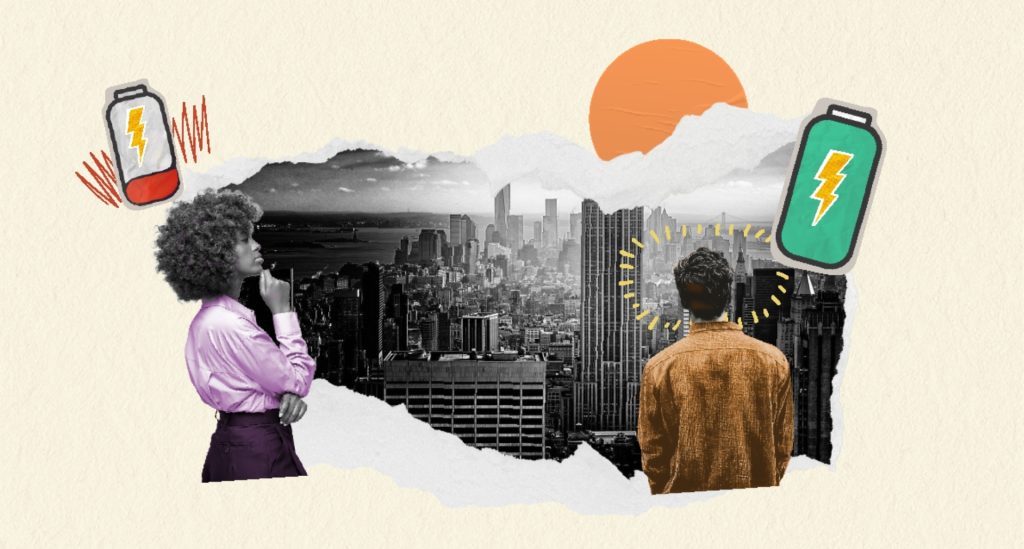
We tend to think of energy as a limited resource: We go to work, we burn energy, and then we need to recharge. But what if our worklife could actually build our reserve of energy, rather than drain it?
My own story is a good example of what’s possible when work and energy stop working against each other.
What teaching taught me about energy
I am lucky to be a high school teacher and, while that might conjure up images of your own high school experience or some movies you have seen, my reality is lot more nuanced than the stereotype.
I work with motivated students who want to learn. I find that I have to keep up with them more than I need to push them along. Their energy heightens my own, and it builds throughout the class. Sure, there are moments when we have to work harder to get the machine going: For teenagers, Monday morning at 7:15 a.m. is probably the lowest moment of energy in the week. But usually, our common interaction gets the energy to build before the bell rings.
This shared spark between my students and myself makes for an energizing class. After all, the quality of our connection with others makes a huge difference in the level of energy we feel at work. But when it comes to building an energizing worklife, could there be other factors at play?
The power of shifting influence
USC Marshall School of Business recently reported the findings of two studies published in personnel psychology about energy at work. They found that “power fluctuation” is the key to having an energizing day at the office. Power fluctuation is defined as “the natural rise and fall of influence throughout a workday such as leading a meeting one hour but deferring to a supervisor the next.” Think about your worklife influence. Can you think of moments where you sometimes lead and sometimes follow?
These power fluctuations result in “a form of mental vitality marked by alertness, focus, and a readiness to act.” In other words: Energy. Energy to move to the next project, the next phone call, the next item on the to-do list.
I see this in my classroom. Modern educational pedagogy dictates that students learn best by doing. So while the teacher begins most lessons as the leader, the students take over the work of the lesson fairly quickly. This models what the USC Marshall study purports: moments of leading and moments of being led make for an energizing worklife.
The power of a varied day
How can you use power fluctuation to build energy in your worklife?
- When planning your day, choose to allocate your time to multiple projects. Spending all day in one mode of responsibility will not build energy.
- As a manager, delegate responsibilities where possible. Once you’ve empowered others to make decisions, let them decide! If you are still micromanaging, you are not going to reap the benefits of power fluctuation.
- If you’re in a supporting role, find areas where you can lead. If possibilities are not easily found, lead a social event or a volunteer opportunity for your coworkers.
When worklife energy becomes a renewable source versus a rare item we need to hoard, we can dive into work knowing we will not run out of energy.
Amy Acchione Myers is an educator with over 20 years of experience in the classroom. When she has the chance, she also performs as an actor and singer.